

A French drain in Ocala is a gravel-filled trench with a perforated pipe that collects standing groundwater and surface water and carries it away from your yard, foundation, or crawlspace. Built right, it uses non-woven filter fabric, washed round stone, and a steady one-percent fall so it keeps draining for years. Premium Leaf Guards installs it the way a licensed inspector would on his own home.
If part of your yard stays soggy days after the rain stops, or water keeps creeping toward the house and under the slab, a French drain moves that water before it does damage. We dig it deep enough, wrap the trench in the right fabric, fill it with washed stone, and give the pipe real fall so it actually drains instead of holding water. The owner, a state-licensed home and building inspector, is on every job.
Licensed home & building inspector on every job · Non-woven fabric and washed stone · Real fall, real discharge · Serving Ocala & Central Florida.
Standing water is patient, and it is rarely just a lawn problem. Left alone, it kills the grass, breeds mosquitoes all summer, softens the soil your foundation and patio sit on, and works its way toward the crawlspace where it feeds mold and wood rot. A wet yard today is often a settling slab or a sick crawlspace later.
There is a second way to lose here: paying for a French drain that was built wrong. A trench with no fabric, the wrong rock, or no real slope silts up and quits draining within a few years, and then the whole thing has to come out and go back in. The cost of doing it right one time is small next to digging up your yard twice.
Water always runs downhill and settles in the low spot. On a lot of Central Florida lots, that low spot is right beside the house, along a fence line, or in the middle of the yard where the grass never quite dries out. Add a layer of clay or hardpan under the sand and the water cannot soak away fast enough, so it just sits there. Ocala gets about 52 inches of rain a year, and in the wet season from June through September it often comes in fast, hard afternoon storms that drop six to eight inches in a month.
That water has to go somewhere. When the yard cannot move it, you see the signs: a squishy strip that stays wet for days, dead or thinning grass, mosquitoes breeding in the standing water, mud washing across the walkway, water sheeting toward the foundation, or a damp, musty crawlspace.
Here is the honest part. This usually is not anything you did. The lot was graded to drain a certain way, or a neighbor’s higher ground sends water across yours, or the soil just will not take it. You deserve to know exactly where the water is coming from, and you deserve a fix that keeps draining instead of clogging up in a couple of years.
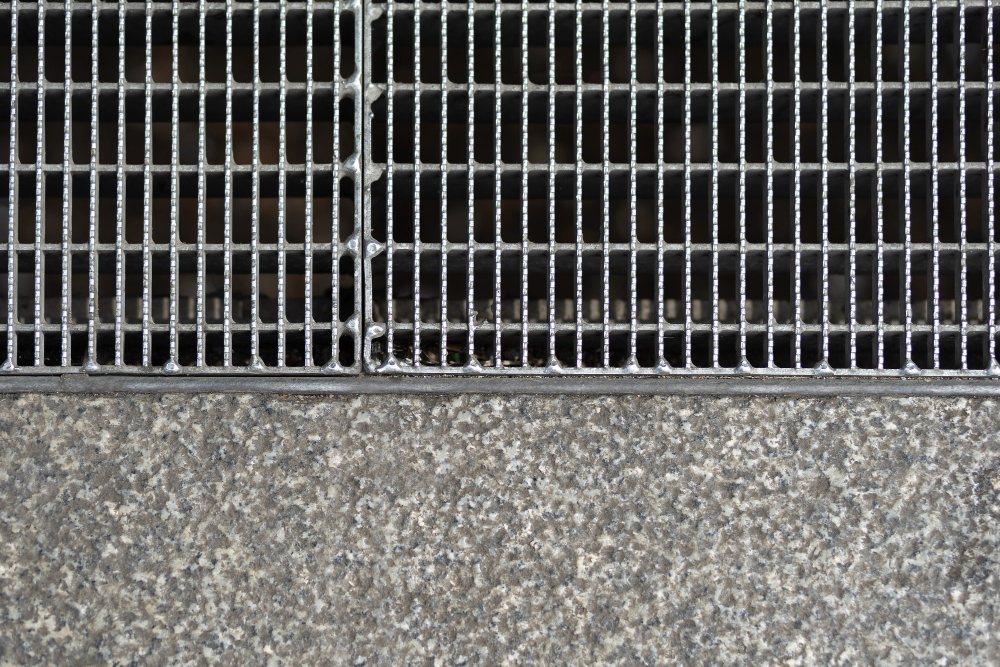
A French drain is simple in theory and easy to get wrong in practice. We dig a trench to the right depth along the path the water wants to take, line the whole trench with non-woven filter fabric, set a perforated pipe in the bottom on a steady fall, surround it with washed round stone, fold the fabric over the top, and blend it back into the yard. Done that way, it collects the water and keeps moving it for the long haul. Here is what each part does and why it matters:
This is the part the quick crews skip. The fabric lets water pass but keeps the surrounding silt and dirt out of the stone. Without it, fine soil washes in, the gaps between the rock fill with mud, and the drain blinds over and quits. We line the full trench, not just wrap the pipe in a thin sock that clogs against the holes.
Clean, round stone leaves open space for water to travel. We do not use pea gravel (too small, packs tight), and we do not use crushed lime rock (cheap, but it holds fines and breaks down over time).
The pipe is pitched at about one percent, roughly an inch of drop every eight to ten feet, so gravity keeps the water moving. A pipe laid flat or, worse, backward is just a buried trough that holds water.
The water has to leave somewhere it cannot come back: a daylight outlet at a grade change, a pop-up emitter in a lower part of the lawn, a dry well, or a catch basin when the lot calls for it.
Everything is done to current codes and modern standards, and the owner, a licensed home and building inspector, is on the job doing about half the work himself, because the system is only as good as the installer.
A French drain is cheap and fast to do badly. Skip the fabric, throw in some pea gravel, and lay the pipe flat, and it will drain great for one season and then plug solid with mud. That is the drain we get called to dig out and replace. Building it with non-woven fabric, washed stone, and real fall costs a little more on day one, and then it keeps working while the cheap one is failing. Pay once, not twice.
A soggy spot that never dries, water pushing toward the house, a wet crawlspace, or a yard that floods every storm. Call or text and describe it.
We walk the lot, find where the water comes from and where it wants to go, and lay out the right drain: where the trench runs, how deep, how it falls, and where it discharges. If the cause is not obvious, our $100 diagnostic gets you a real answer, and it is credited to the job if you hire us.
We dig the trench, line it with fabric, set the perforated pipe on proper fall, surround it with washed stone, backfill, and leave the yard clean. Workmanship is covered by our 2-year workmanship warranty.
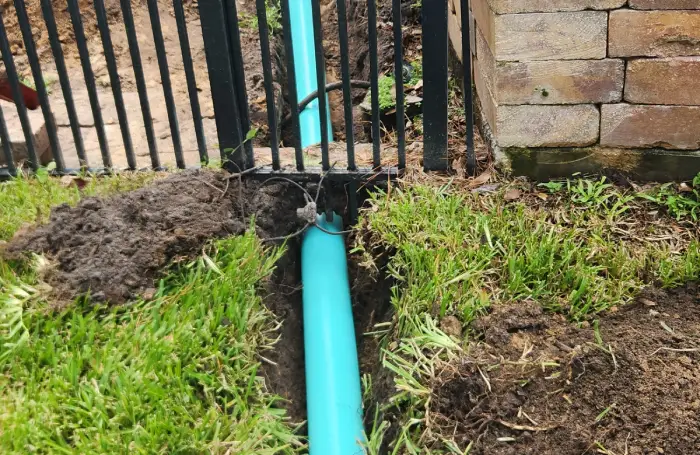
A French drain is for the homeowner who is tired of a yard that will not dry out and wants it handled correctly the first time. Many of our clients are established and retiree homeowners across Central Florida who would rather pay once for a drain that keeps working than fight standing water every wet season. If a simple regrade or a downspout extension fixes your problem, we will tell you that, because the goal is a dry yard, not the biggest invoice.
A French drain is often one piece of a larger plan. When the trouble is roof water dumping at the house, buried solid PVC underground drainage is the better tool. When water runs in from a hillside or a neighbor’s higher lot, a curtain drain catches it at the property line, and for heavy cases we add catch basins and dry wells. See how it all fits together on our drainage and water mitigation page. We serve Ocala, The Villages, and the surrounding Central Florida communities. See the full service area.
Picture the next hard summer storm. The rain comes down fast, the low spot fills for a minute, and then the water slips into the drain and runs off to where it belongs. A day later the yard is firm again. The grass comes back. No mosquitoes hovering over a puddle, no mud on the walkway, no water creeping toward the foundation, no musty crawlspace. The drain is buried, blended into the lawn, and built to keep working storm after storm. That is what a French drain done right buys you: a dry yard and one less thing to worry about.
A French drain is a trench filled with washed stone and a perforated pipe that collects water from the surrounding soil and carries it away to a lower spot. Water seeps through the stone, into the holes in the pipe, and flows out by gravity. It is the standard fix for a yard, foundation, or crawlspace that holds water.
Yes, when they are built for the soil. Our sandy ground drains fast in places, but a clay or hardpan layer underneath traps water and keeps it from soaking away, which is exactly when a French drain earns its keep. The key in Florida is non-woven fabric and washed stone so fine soil does not silt the drain shut.
Almost always for one of four reasons: no filter fabric, so silt fills the stone; the wrong rock, like pea gravel or lime rock that packs and breaks down; not enough fall, so water sits in the pipe; or a pipe that discharges into another low spot instead of a real outlet. We build to avoid all four.
They solve different problems. Underground drainage carries roof water from your downspouts in solid PVC and discharges it away from the house. A French drain collects groundwater and surface water that pools in the yard or against the foundation. Some homes need one, some need both, and we will tell you which after we look.
It depends on where the water is and where it has to go. Many yard drains run roughly 18 to 24 inches deep, but a drain protecting a foundation or crawlspace may need to be deeper. We set the depth and the fall together so the line drains by gravity to its outlet.
We line the whole trench with non-woven filter fabric, then place the stone and pipe inside it. A thin sock wrapped only around the pipe clogs against the holes in silty soil and chokes the drain. Lining the trench keeps the surrounding dirt out of the stone so water keeps flowing for years.
It depends on the length of the run, how deep it has to go, the soil, and where the water can discharge. We do not post prices because no two yards are the same, and we will not quote you blind. Call or text (352) 440-3310 for a free estimate and we will price the whole job all-in.
Non-woven fabric, washed stone, real fall, and a real discharge, installed by a licensed inspector who is on the job. All-in pricing, no pressure, and if a simpler fix does the job, we will tell you.