

Half-round gutters are rain gutters with a smooth, semicircular trough, the original profile on homes built before the 1960s. Premium Leaf Guards installs half-round gutters in aluminum and copper on historic and high-end homes across Ocala and Central Florida, sized for heavy rain and hung tight by a licensed inspector on every job. Free estimate: (352) 440-3310.
If you own an older Ocala home, a craftsman bungalow, a Queen Anne, or any house with real architecture, a flat, angular gutter can look wrong the day it goes up. Half-round is the shape those homes were built to wear. It is the classic semicircular trough that drains clean, flushes easy, and looks right from the street. We install it the way it should be done: the correct size for our rain, hung tight so it does not sag or pull off, by a licensed home and building inspector who is on the job instead of a crew you never meet.
A half-round gutter is exactly what it sounds like: a trough shaped like a tube cut in half, a smooth half-circle running along the eave. It is the oldest gutter profile there is, the one almost every home wore before the 1960s, when the flat-faced style took over because it was cheaper to roll. So when you see half-round on a house today, it reads as the real thing.
The other common shape is K-style, the gutter most houses have now. It has a flat back and an angular face that looks a little like crown molding. It carries more water per inch of width and costs less, which is why builders default to it. Half-round trades a little of that capacity for a cleaner look and a smoother trough.
Half-round comes in aluminum and in copper. Aluminum half-round gives you the classic look at a sensible price. Copper half-round is the heirloom version that ages into a patina and lasts the longest; that has its own page. Both are real half-round and both get hung the same careful way. This is the top of our specialty work, and it sits next to the rest of it. If a standard profile is all your home needs, that is our everyday seamless gutter work.
People choose half-round for two reasons: it looks right, and it drains clean. On the right house, no other profile comes close on looks. The Ocala Historic District alone covers about 173 acres and more than 200 homes from the 1880s to the 1930s, Queen Anne, Colonial Revival, Carpenter Gothic, and craftsman bungalows with wide porches, many of them under that famous canopy of live oaks along Fort King Street and the streets around it. Those homes were designed with half-round gutters. Put the flat modern style on them and something looks off. Put half-round back and the house looks like itself again.
The shape works as well as it looks. The inside of a half-round trough is one smooth curve with no creases or square corners, so there is nothing for grit and shingle sand to pack into. Water moves through it fast, a scoop slides right along it, and a garden hose flushes it toward the downspout without snagging. That smooth interior is also why half-round tends to resist the corrosion and slow buildup that eat at cornered gutters.
On a home people notice, that classic profile adds real curb appeal and resale value the way a good roof or good windows do. A fine old house deserves the gutter it was built for, not the cheapest thing on the truck. We help you get the look right and the drainage right at the same time.
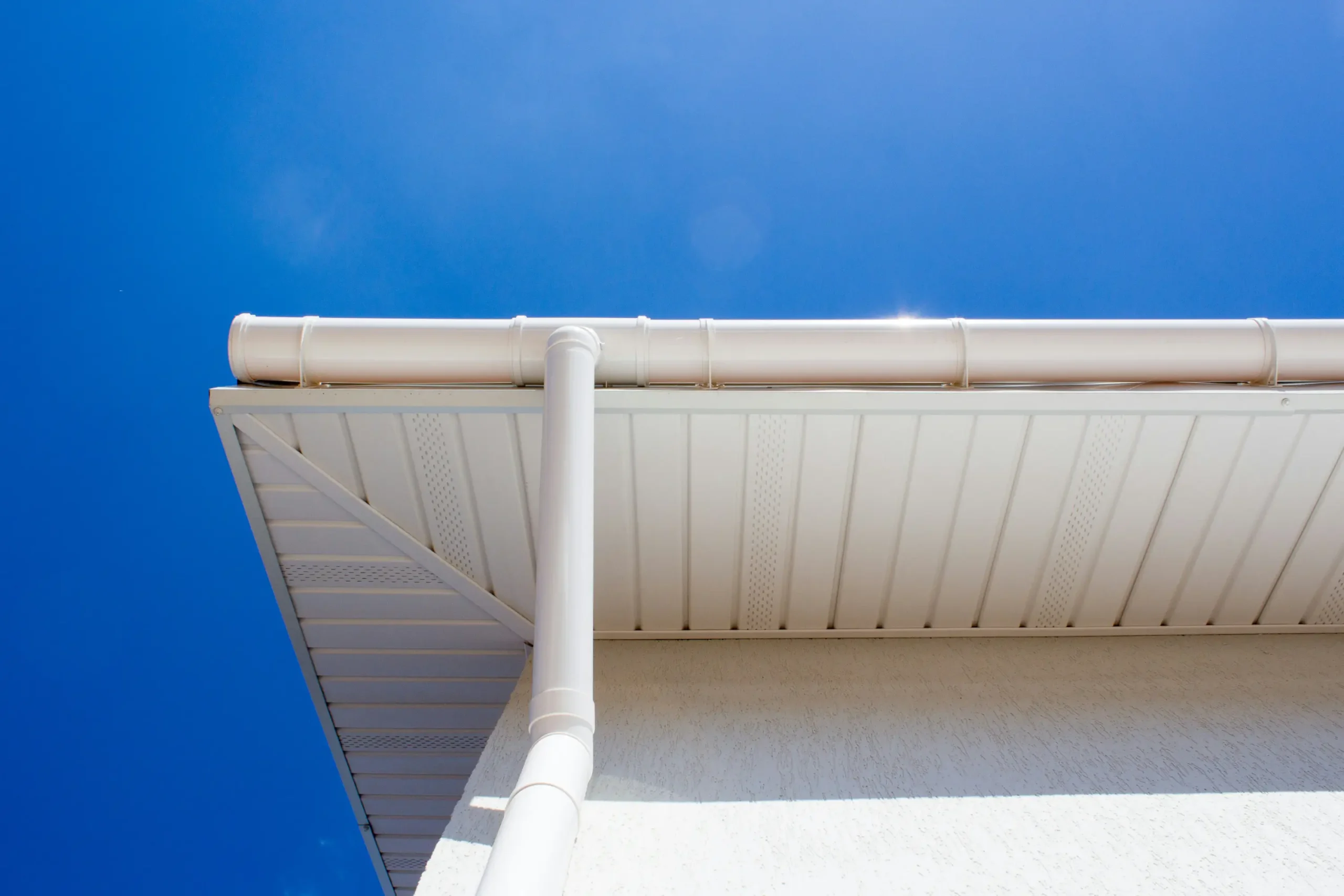

Here is the straight answer most installers will not give you. Half-round is not better than K-style at everything. The one real trade-off is capacity. Because the trough is a half-circle instead of a deep box, the same width holds less water. A K-style gutter carries roughly 20 to 30 percent more than a half-round of the same size.
That matters here, because Ocala gets about 52 inches of rain a year, and our wet season from June through September dumps 6 to 8 inches a month in hard, fast afternoon storms. An undersized half-round can run over the front edge in a downpour, and then people blame the profile when the real problem was the sizing.
The fix is simple, and it is why the installer matters more than the shape. We size half-round up. On most homes we put on 6 inch half-round instead of 5 inch so the trough carries the volume our storms throw at it, and we add or reposition downspouts so the water has enough places to leave. Done that way, a half-round system keeps up with Florida rain and still gives you the classic look.
If your real goal is maximum capacity and the look is not a priority, we will tell you K-style is the smarter buy and do it in our seamless gutter work instead. The point is to fit the gutter to the house, not to talk you into the prettier one.
A half-round gutter is only as good as the way it is hung. Because the trough is round, it cannot just screw to the fascia the way a flat-backed gutter does. It rides in brackets, either an external cradle that wraps under the curve or a concealed hanger inside the trough, and those brackets have to be set tight and set often. Space them too far apart, the way a rushed crew will, and a round gutter sags between the supports and starts to pour over the low spots. Florida practice allows hanger spacing out to about three feet. We set tighter than that, closer to every two feet, so the run holds its shape and does not pull away in a storm.
The metal matters too. In aluminum we run heavier .032 coil, not the thin .027 the cheap installers use. The thicker metal is about 18 percent more material and roughly 50 percent more resistant to bending, so the half-round keeps its true round shape and a ladder or a falling branch does not crease it. In copper we run a heavy gauge and solder the seams; that lives on its own copper gutters page.
Then there is the part nobody sees that decides whether the system works: the fall and the downspouts. We set the right slope toward each outlet so water actually leaves the trough, and we place enough downspouts in the right spots so a half-round keeps up with a hard rain. From there we get the water away from the house, ideally about five feet out, with solid pipe, not the corrugated stuff that breaks underground. Everything is built to current codes and modern standards, and a licensed home and building inspector is on the job. The system is only as good as the installer, and with half-round that is the whole game.
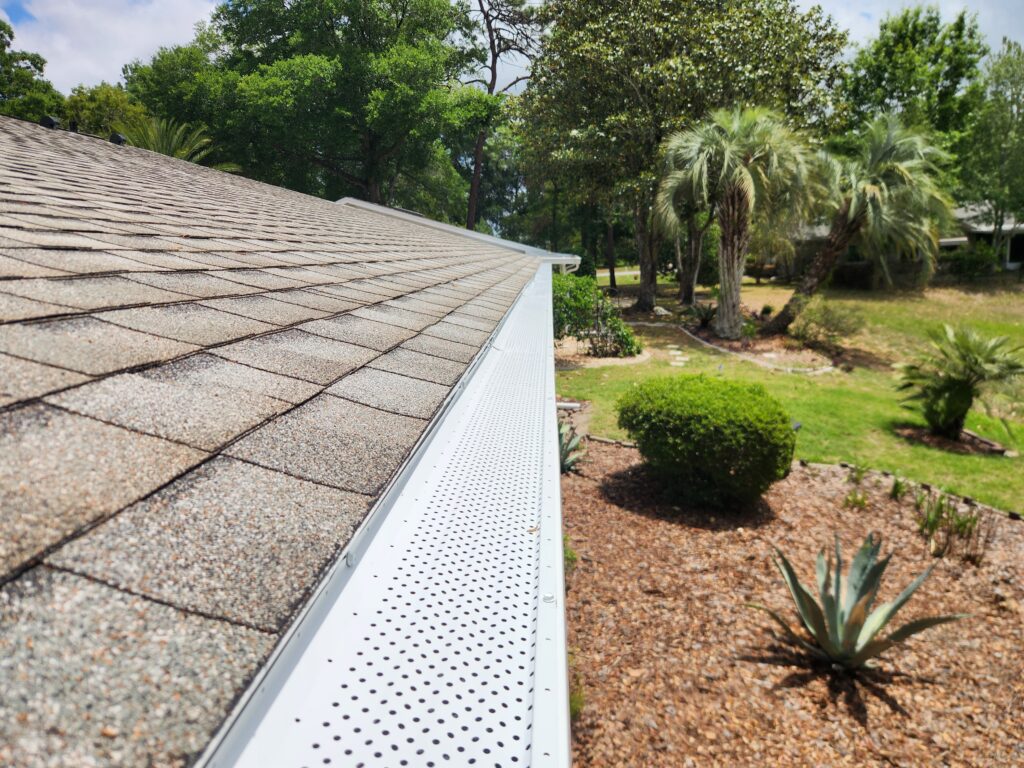
Half-round comes in two materials worth considering, and the right one depends on your home and how long you plan to keep it.
Aluminum half-round is the practical pick. Hung heavy and tight the way we do it, a .032 aluminum system lasts 20 to 30 years or more, never rusts, and gives you the classic profile for a fraction of the cost of copper. For most older Ocala homes that want the right look without an heirloom budget, this is the one.
Copper half-round is the forever version. Solid copper, soldered at the seams, commonly lasts 50 to 100 years, often longer than the roof above it, and weathers into the blue-green patina people pay for. It belongs on a showcase historic home, a custom build, or a feature run over a front entry. If that is what you are after, read the copper page for the full story.
We will give you a straight read on which makes sense for your house and your budget, and we are glad to quote both so you can see the difference in plain numbers.
We like doing half-round, but we are not going to push it on you. Half-round earns its keep on the right house: a historic or period home, a craftsman bungalow, a high-end or custom build, or a feature run across a front porch where the look carries the whole street view. On homes like those, the classic profile is worth the extra it costs to fabricate and hang.
On a lot of houses, it is not the right call. If your home is a newer build, if the gutters live around the back where nobody sees them, or if your real goal is simply gutters that move the most water and stop pulling off the house, then K-style at the heavy gauge and tight spacing we use will serve you better for less. We will tell you that to your face.
And if you want half-round as a true lifetime upgrade, copper is the way to do it. The right answer is the one that fits your home and your budget, not the biggest ticket.
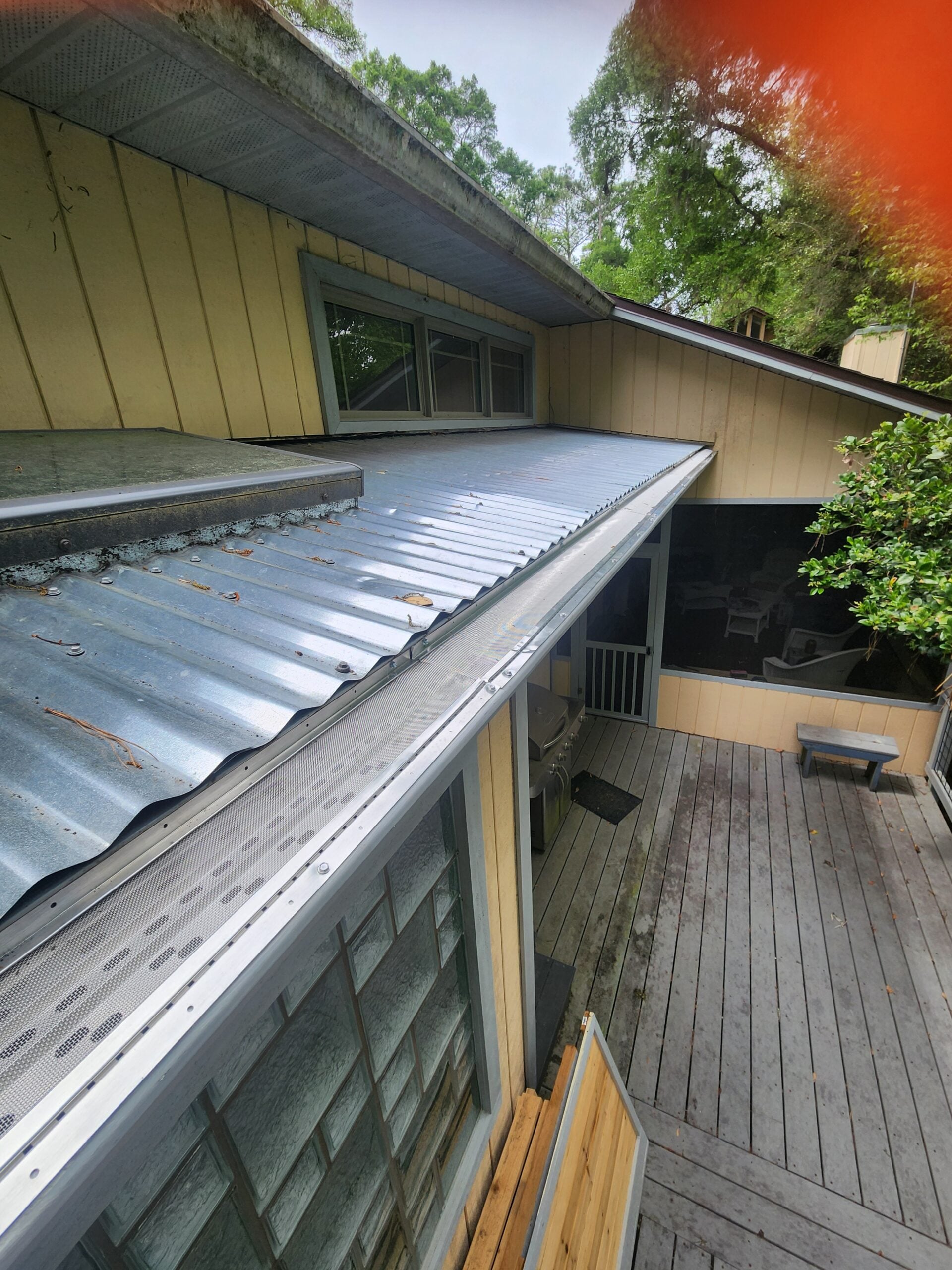
A half-round trough flushes well, but it is still an open gutter, and under Ocala’s oaks and pines it will load up with leaves and needles if you leave it open. The last thing you want is to be up on a ladder twice a year clearing a gutter you paid a premium for.
We can fit a 316L surgical stainless micro-mesh guard to a half-round system so it sheds debris and keeps the trough clear, shaped to follow the curve instead of fighting it. That keeps your classic gutter doing its one job, moving water away from the house, and keeps you on the ground instead of on a ladder.
Call or text (352) 440-3310, or send a photo of the house and the roofline. We will tell you on the phone whether half-round fits, and whether aluminum or copper makes sense.
A licensed inspector confirms the lengths, the right size for our rain, the bracket plan, and the downspout placement, then prices the whole job with no surprises.
We form the half-round, set the brackets tight to true fall, hang it to keep its shape, and stand behind the workmanship.
Not ready to decide? We will give you an honest read on whether half-round is right for your home.
This page is for you if you own a historic or period home, a craftsman bungalow, a Queen Anne or revival house in or near the Ocala Historic District, or a custom build, and you want the classic gutter profile done right. It is also for the homeowner who only wants half-round on a feature run, a front porch or an entry, while the rest of the house stays in standard K-style.
We will be straight with you on scope. We work on one and two story buildings, and half-round work stays inside that. If a job is taller than that, we will tell you and point you the right way instead of taking on something that is not ours to do.
We serve Ocala, The Villages, and the surrounding Central Florida counties, roughly an hour out from Ocala, including Marion, Lake, Sumter, Alachua, and Putnam.
The reason half-round gets hung right here is that the owner does it. Premium Leaf Guards is run by a state-licensed home and building inspector and court-recognized construction expert with more than twenty years in the trade. He is on every job and does about half of each install himself, because the system is only as good as the installer, and that is especially true with a round profile that has to be sized and bracketed correctly.
He over-engineers to current codes, answers his own phone, and will tell you honestly when half-round is not the right call for your home. Read the full story.
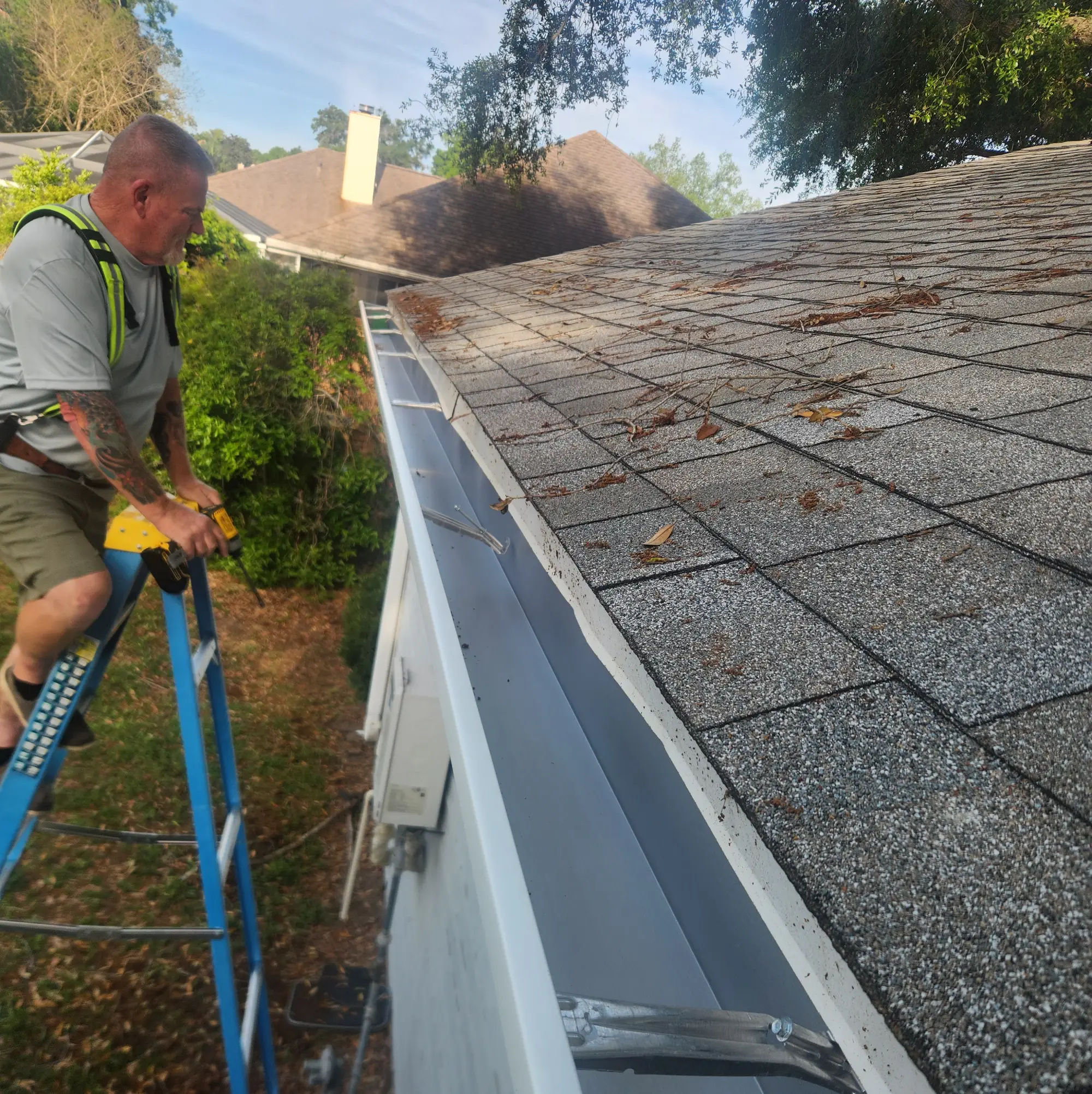
Half-round gutters are a smooth, semicircular trough, the original gutter profile that almost every home wore before the 1960s. They suit historic and period homes because they are the shape those houses were designed with, so the look stays authentic. They also drain cleanly thanks to the smooth interior.
It depends on what you want. Half-round wins on looks and on a clean, smooth-draining trough, while K-style holds about 20 to 30 percent more water for the same width and costs less. For period homes the look usually wins; for maximum capacity on a plain roofline, K-style can be the smarter buy. We will tell you which fits your home.
No. The inside of a half-round trough is one smooth curve with no square corners for grit to pack into, so it actually sheds and flushes debris better than a cornered gutter. It is still an open gutter, though, so under oaks and pines we recommend a micro-mesh guard to keep it clear and keep you off a ladder.
For most Ocala homes we recommend 6 inch half-round rather than 5 inch. Because a round trough holds less water than a boxy K-style of the same width, sizing up keeps it from overflowing in our heavy summer storms. We also add or reposition downspouts so the water has enough places to leave.
It depends on the material. Heavy .032 aluminum half-round, hung tight, lasts 20 to 30 years or more and never rusts. Solid copper half-round, soldered at the seams, commonly lasts 50 to 100 years. Tight bracket spacing and correct hanging are what get you the long end of those ranges.
Half-round costs more than standard K-style because it takes special brackets and more skill to fabricate and hang, and copper costs several times more than aluminum. We keep exact pricing off the page because it depends on your home’s size, the material, and the run length. Call or text us for a straight, all-in number for your house.
Yes. We fit a 316L stainless micro-mesh guard shaped to follow the half-round curve, so it sheds oak leaves and pine needles and keeps the trough clear. Matching the guard to the profile keeps your classic gutter working and keeps you off a ladder.
Half-round runs are formed in long lengths and joined at as few points as possible, with corners and joints fastened and sealed for the metal used; copper joints are soldered into one continuous piece. The result is far fewer seams than old sectional gutters, which is where leaks usually start. We hang it tight so those joints stay sound for the life of the gutter.
Tell us about your house and we will tell you straight whether half-round is the right call, whether aluminum or copper fits, and what it costs all-in. A licensed inspector sizes it for our rain and hangs it tight so it keeps its shape and its looks for decades. No pressure, and an honest answer either way.